




In today’s fast-paced logistics and industrial environment, businesses are constantly seeking innovative ways to optimise their operations without incurring excessive costs. One of the most effective and practical solutions is the installation of a warehouse mezzanine. This versatile structure allows companies to make better use of vertical space, improving storage capacity and operational efficiency without the need for relocation or expansion.
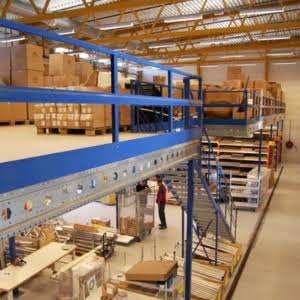
A warehouse mezzanine is essentially an intermediate floor installed within an existing building, typically between the ground floor and the ceiling. It is not considered a full floor but rather a raised platform supported by a steel framework. Mezzanines can be customised for a wide range of applications, including storage, office space, production areas, or even retail displays.
One of the key advantages of a warehouse mezzanine is its ability to maximise unused vertical space. Many warehouses have high ceilings, yet much of that space remains underutilised. By installing a mezzanine, businesses can effectively double or even triple their usable floor area. This is particularly beneficial for growing companies that require additional space but want to avoid the significant expense and disruption of moving to a larger facility.
Warehouse mezzanines are highly adaptable and can be designed to suit specific operational needs. There are several types of mezzanine systems available, including freestanding, rack-supported, and shelf-supported designs. Freestanding mezzanines are the most common and are independent structures that can be installed almost anywhere within a warehouse. Rack-supported mezzanines use existing pallet racking as their support system, making them a cost-effective option for storage-heavy operations. Shelf-supported mezzanines are ideal for facilities that rely heavily on shelving units.
The materials used in mezzanine construction are typically steel due to its strength, durability, and load-bearing capabilities. The flooring can vary depending on the intended use, with options such as steel grating, plywood, or concrete. Safety features are also a critical component, including guardrails, handrails, staircases, and sometimes lifts or conveyors to facilitate the movement of goods between levels.nybusines.com
Another major benefit of warehouse mezzanines is cost efficiency. Compared to building extensions or relocating to a new site, installing a mezzanine is significantly more affordable. It also requires less time to implement, meaning businesses can quickly adapt to changing demands. Additionally, mezzanines are often considered temporary or semi-permanent structures, which can offer tax advantages in some regions.
Beyond storage, mezzanines can transform how a warehouse operates. For instance, companies can use the upper level for office space, allowing managers and administrative staff to work close to the warehouse floor. This integration improves communication and oversight. Similarly, mezzanines can be used for packing stations, quality control areas, or light manufacturing processes, helping to streamline workflows and reduce congestion on the ground floor.
Safety and compliance are essential considerations when installing a warehouse mezzanine. The structure must adhere to local building codes and regulations, including load capacity requirements and fire safety standards. Proper design and engineering are crucial to ensure the mezzanine can safely support its intended use. Regular inspections and maintenance are also necessary to maintain safety and performance over time.
When planning a mezzanine installation, businesses should carefully assess their current and future needs. Factors such as load requirements, available headroom, access points, and workflow patterns all play a role in determining the most suitable design. It is often beneficial to work with experienced designers and engineers who can provide tailored solutions and ensure compliance with all relevant standards.
Another important aspect to consider is accessibility. Efficient movement between levels is vital for productivity. Staircases are the most common access method, but depending on the operation, businesses may also require lifts, pallet gates, or conveyor systems. These additions can significantly enhance efficiency by reducing manual handling and speeding up the transfer of goods.
Warehouse mezzanines also contribute to better organisation. By creating designated areas for different functions, businesses can reduce clutter and improve inventory management. This structured approach can lead to faster picking times, fewer errors, and improved overall productivity. In highly competitive industries such as e-commerce and logistics, these efficiencies can make a significant difference.
From an environmental perspective, mezzanines can also be a sustainable solution. By optimising existing space rather than constructing new buildings, businesses can reduce their environmental footprint. This approach minimises the need for additional land use and lowers the energy and materials required for construction.
Despite their many advantages, warehouse mezzanines are not without challenges. Initial planning and design require careful consideration, and installation must be carried out by qualified professionals. There may also be limitations based on the building’s structure, ceiling height, or load-bearing capacity. However, with proper planning and expert guidance, these challenges can be effectively managed.nybusines.com
In conclusion, a warehouse mezzanine is a highly practical and cost-effective solution for businesses looking to maximise space and improve operational efficiency. Its flexibility, scalability, and relatively low cost make it an attractive option for a wide range of industries. Whether used for storage, office space, or production, a mezzanine can transform a warehouse into a more organised, efficient, and productive environment. As businesses continue to grow and adapt to changing demands, the warehouse mezzanine remains a valuable tool for making the most of available space without the need for costly expansion.
If you’d like, I can also add FAQs, a comparison table, or optimise this for SEO with keywords and meta description.