




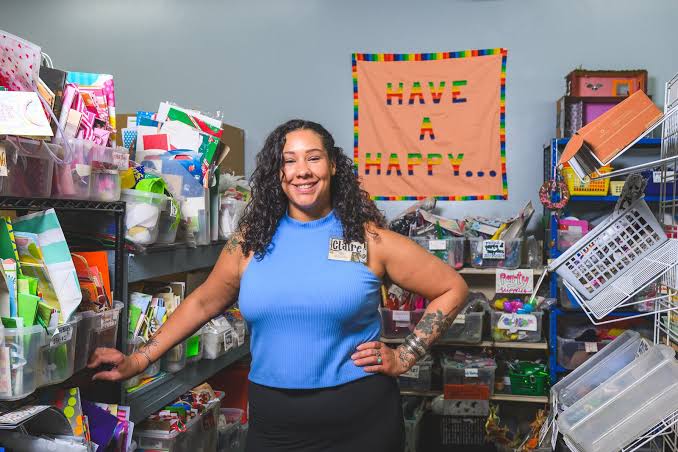
In Ann Arbor, Michigan, creativity and sustainability have long been closely connected. One of the most distinctive examples of this connection is the Scrap Box, a creative reuse resource that has given artists, teachers, students, families and makers an affordable way to discover materials that might otherwise have been thrown away. Rather than treating leftover materials as waste, the Scrap Box encourages people to see possibilities in everyday objects.
The Scrap Box has historically been associated with Ann Arbor’s creative reuse community and was known for collecting surplus and donated materials from businesses and individuals. Older local and University of Michigan sustainability resources identify The Scrap Box as an Ann Arbor reuse destination, while community accounts describe it as a place filled with unusual and inexpensive materials for creative projects. (E.H. Sherman)
What Is the Scrap Box?
The Scrap Box is best understood as more than a conventional craft shop. Its purpose has been to give discarded, surplus and reusable materials another life. Instead of purchasing brand-new supplies for every project, visitors can explore an assortment of materials donated by companies, organisations and members of the community.
The appeal comes partly from the unpredictability. A conventional art shop allows shoppers to search for a particular product, but a creative reuse centre encourages visitors to look at materials differently. Fabric scraps, paper, cardboard, yarn, wood pieces, packaging materials and other miscellaneous objects can become decorations, teaching aids, sculptures, costumes, models or children’s crafts.
A University of Michigan sustainability guide previously listed The Scrapbox among Ann Arbor’s reuse outlets and described it alongside other organisations that helped residents purchase or reuse unwanted materials. (Graham Sustainability Institute)
Why Scrap Box Ann Arbor Became Popular
One of the most attractive features of the Scrap Box has always been affordability. Art supplies can become expensive, particularly for teachers, parents, students and community organisations that need large quantities of materials. Creative reuse provides another option.
Instead of buying a packet of new craft components, a teacher might find an assortment of interesting objects that can be used for a classroom activity. An artist may discover an unusual piece of material that inspires a new work. Children can experiment without the pressure associated with using expensive supplies.
The experience also encourages imagination. A piece of cardboard does not have to remain cardboard. A leftover tube can become part of a model, while fabric remnants can become costumes or decorations. This philosophy turns shopping into an exploration of possibilities.
A Resource for Teachers and Schools
Teachers are among the people who can benefit greatly from creative reuse. Classroom projects often require materials that students can cut, glue, paint, build and transform. Buying everything new can put pressure on school budgets.
A reuse centre provides an alternative source of inexpensive materials. Teachers can collect supplies for art projects, science models, displays and imaginative activities while simultaneously introducing students to the principles of reuse.
The educational value extends beyond the project itself. Students can learn that useful objects do not necessarily become worthless when their original purpose ends. This connects creativity with environmental awareness and helps make sustainability a practical concept rather than simply a theory.
Helping Artists Think Differently
Artists can also find inspiration through creative reuse. Traditional art supply shops generally organise products according to their intended purpose. Creative reuse spaces offer a different experience because materials may not have an obvious artistic function.
This can encourage experimentation. A maker might discover an unusual texture, shape or colour and build an entire project around it. The limitations of working with reclaimed materials can actually stimulate creativity.
For many artists, the attraction is therefore not simply the low cost. It is the element of discovery. Visitors may enter looking for one particular material and leave with something completely different because an unexpected object sparked an idea.
The Environmental Side of Creative Reuse
The environmental argument for creative reuse is straightforward. When usable materials are redirected towards another purpose, they can avoid becoming waste.
The Scrap Box has been connected with this broader Ann Arbor culture of reuse for decades. Local environmental resources have highlighted creative reuse as one way residents can extend the useful life of materials. Historical accounts describe businesses and individuals donating remnants and surplus supplies that could then be used by artists, children and educators. (E.H. Sherman)
This approach is particularly valuable because it changes the relationship people have with waste. Instead of asking whether something can simply be thrown away, creative reuse asks whether someone else could use it.
The Scrap Box and Ann Arbor’s Creative Community
Ann Arbor has a strong culture of education, arts, innovation and community involvement. The University of Michigan contributes to the city’s large student and academic population, while local schools, artists, families and community groups create demand for affordable creative resources.
The Scrap Box fits naturally into that environment. Its unusual inventory makes it useful for many different types of projects, from children’s crafts to experimental artwork.
Community references have described the organisation as a particularly memorable destination for artists and children. One local account recalled visiting as a child and described the enormous variety of donated materials available for creative exploration. (E.H. Sherman)nybusines.com
Creative Reuse Beyond the Scrap Box
The principles associated with the Scrap Box continue to reflect Ann Arbor’s wider reuse culture. Other local organisations also focus on recycling, reuse and keeping useful materials out of the waste stream.
For example, SCRAP Creative Reuse is currently listed in Ann Arbor at 4567 Washtenaw Avenue. It represents the continuing presence of creative reuse in the local community. Local recycling resources also provide additional options for materials that are no longer suitable for creative reuse.
The important distinction is that reuse should generally come before recycling when an object can still serve a useful purpose. Recycling breaks materials down for processing, while reuse keeps the object or material useful for longer.
Why Creative Reuse Still Matters
The idea behind the Scrap Box remains relevant because people are increasingly interested in affordable creativity and responsible consumption. New materials are convenient, but they are not always necessary.
Creative reuse encourages people to work with what already exists. It can reduce costs, inspire experimentation and give surplus materials another purpose. For children, it can also make creativity more accessible because there is less concern about wasting expensive supplies.
Perhaps the greatest value is the mindset it encourages. Creative reuse teaches people to look beyond an object’s original function. A discarded item can become a component of something new, useful or beautiful.
Final Thoughts
Scrap Box Ann Arbor represents an important idea within the city’s creative and sustainability culture: materials do not have to be new to be valuable. By connecting surplus resources with people who can use them, creative reuse can support artists, teachers, students, families and makers while helping reduce unnecessary waste.
Whether someone is planning a classroom activity, developing an art project, building a costume or simply searching for inspiration, the concept behind the Scrap Box offers an appealing alternative to conventional shopping. Instead of beginning with a finished product in mind, visitors can begin with curiosity and discover what the materials inspire them to create.
That spirit of experimentation is what makes creative reuse so compelling. In a city known for education, creativity and community innybusines.comvolvement, the Scrap Box has become part of a larger story about seeing possibilities where others might see leftovers.
If you want, I can also turn this into an SEO-focused version with the keyword “Scrap Box Ann Arbor” naturally repeated, a meta title, meta description, and FAQs.