





The National Incident Management System, commonly known as NIMS, is a comprehensive framework designed to help communities, organisations, government agencies and emergency responders work together effectively during incidents. One of the most important principles associated with NIMS is that it applies to all stakeholders with incident-related responsibilities. This broad approach recognises that modern emergencies are rarely handled by a single organisation. Instead, successful incident management depends on coordination among numerous agencies, departments, private organisations, community groups and individuals.https://nybusines.com
NIMS provides a common structure for managing emergencies regardless of their size, cause or complexity. Whether the incident involves a natural disaster, public safety emergency, infrastructure failure, hazardous materials event or large-scale public gathering, organisations can use NIMS principles to establish effective coordination and communication.
Understanding the Purpose of NIMS
NIMS was developed to provide a consistent national approach to incident management. Before standardised systems were widely adopted, different agencies could use different terminology, organisational structures and procedures. These differences could create confusion during emergencies, particularly when multiple agencies needed to work together.
NIMS addresses this challenge by establishing common principles, terminology and systems. It supports preparedness, response, recovery, mitigation and prevention activities. Most importantly, it encourages organisations to operate as part of a coordinated system rather than functioning independently.
The idea that NIMS applies to all stakeholders with incident-related responsibilities is therefore essential. An emergency does not stop at organisational boundaries. A major incident can affect transportation, healthcare, communications, utilities, businesses, schools, law enforcement and the wider community at the same time.
Who Are the Stakeholders?
Stakeholders with incident-related responsibilities can come from many different sectors. Government agencies are among the most visible participants. Local, state, tribal and federal organisations may all have responsibilities depending on the nature and scale of an incident.
Emergency management agencies, fire departments, law enforcement agencies and emergency medical services frequently have direct operational responsibilities. Public works departments may be responsible for roads, drainage systems, debris removal or damaged infrastructure. Health agencies may coordinate disease control, medical resources and public health information.https://nybusines.com
Private-sector organisations are also important stakeholders. Utility companies, transportation providers, telecommunications companies, hospitals, contractors and other businesses may possess critical resources or infrastructure needed during an emergency. Their cooperation can significantly influence how quickly a community can respond and recover.
Non-governmental organisations and community-based organisations can also play important roles. Organisations involved in sheltering, food distribution, volunteer coordination, donations and community assistance often provide essential support during disasters.
Individuals can have responsibilities as well. Employees may have specific emergency duties within their workplaces, while volunteers can assist with community response activities when properly trained and coordinated.
Why Common Standards Matter
When many stakeholders participate in an incident, communication becomes one of the greatest challenges. Different organisations may have different responsibilities, priorities and operating procedures. Without a common framework, these differences can slow decision-making and create duplication of effort.
NIMS helps address this problem by promoting common terminology and standardised approaches. Personnel from different organisations can understand roles, responsibilities and organisational structures more easily when they operate under a shared system.https://nybusines.com
This does not mean every organisation performs the same job. Instead, NIMS helps different organisations understand how their individual responsibilities fit into the larger incident management process.
For example, during a major storm, emergency responders may focus on immediate life safety, while public works agencies clear roads and utility companies restore power. Healthcare organisations may manage injured or displaced people, while emergency management officials coordinate resources and information. Each stakeholder performs a different role, but NIMS helps establish a coordinated approach.
The Incident Command System
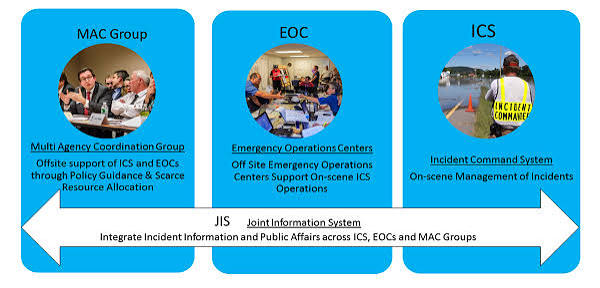
One of the major components associated with NIMS is the Incident Command System, or ICS. ICS provides a standardised organisational structure for managing incidents.https://nybusines.com
The system can be scaled according to the size and complexity of an event. A small incident may require only a few personnel, while a major disaster can involve hundreds or thousands of responders and numerous agencies.
ICS establishes clear responsibilities and reporting relationships. This can reduce confusion about who is responsible for particular activities. It also supports the integration of personnel and resources from different organisations.
The system is flexible enough to be used by different types of organisations. Firefighters, police officers, emergency managers, healthcare professionals, public works employees and other personnel can operate within a common organisational framework.
Coordination Between Organisations
NIMS emphasises coordination because no single stakeholder can manage every aspect of a complex incident. Effective incident management requires information sharing, resource coordination and joint decision-making.
Multi-agency coordination can become especially important when an incident extends across several jurisdictions. For example, a major flood may affect multiple towns or counties. Local authorities may require assistance from regional, state or federal organisations. NIMS provides principles that help these organisations coordinate their activities.https://nybusines.com
The same concept applies to incidents involving private companies. If a telecommunications network is damaged during a disaster, emergency responders may depend on telecommunications providers to restore communications. Similarly, utility companies may need information from emergency officials to prioritise restoration efforts.
Training and Preparedness
Because NIMS applies to many different stakeholders, training is an important part of implementation. Personnel need to understand the roles they may perform during an incident and how their responsibilities connect with those of other organisations.
Preparedness activities can include training, exercises, planning and resource management. Exercises allow organisations to test their plans before an actual emergency occurs. They can identify communication problems, resource shortages and unclear responsibilities.
Regular training also helps organisations maintain familiarity with incident management principles. When an emergency occurs, personnel are more likely to respond effectively if they have previously practised their roles and procedures.https://nybusines.com
NIMS and Resource Management
Resource management is another important part of incident response. Emergencies often require equipment, personnel, facilities, vehicles, supplies and specialised expertise.
Because multiple organisations may request the same resources, coordination is necessary. NIMS supports processes for identifying, requesting, tracking and managing resources.
Effective resource management helps ensure that critical resources reach the areas where they are most needed. It can also reduce duplication and improve accountability.
For example, several agencies responding to a wildfire may require communications equipment, vehicles, protective gear and specialised personnel. A coordinated resource management process helps decision-makers understand what is available and where resources should be assigned.
The Importance of Communication
Clear communication is fundamental to successful incident management. During emergencies, information can change rapidly, and inaccurate or incomplete information can lead to poor decisions.
NIMS promotes common communication practices so that participating organisations can exchange information efficiently. Communication is not limited to emergency responders. Public information officials, community organisations, businesses and government leaders may also need accurate information to perform their responsibilities.
Consistent communication can help reduce confusion and ensure that stakeholders receive the information required to make informed decisions.
Applying NIMS Beyond Emergency Response
Although NIMS is strongly associated with emergency response, its principles can support activities throughout the incident management cycle. Prevention, preparedness, response, recovery and mitigation all benefit from coordination.https://nybusines.com
Before an incident, stakeholders can use NIMS principles to develop plans, train personnel and conduct exercises. During an incident, they can use established structures and processes to coordinate operations. After the incident, the same stakeholders can work together on recovery and mitigation efforts.
This broad application reinforces the idea that NIMS is not simply a system for emergency responders. It is a framework for organisations and individuals who have responsibilities connected to incident management.
Conclusion
The statement that NIMS is applicable to all stakeholders with incident-related responsibilities reflects one of the framework’s most important principles. Modern emergencies require cooperation among many organisations, and effective coordination cannot depend on one agency working alone.
Government agencies, emergency responders, private-sector organisations, healthcare providers, non-governmental organisations, community groups and other stakeholders may all contribute to incident management. NIMS gives these participants a common framework for communication, coordination, resource management and organisational structure.https://nybusines.com
By using shared principles and terminology, stakeholders can work together more effectively before, during and after emergencies. Ultimately, the value of NIMS lies in its ability to bring diverse organisations together around a coordinated approach. When every stakeholder understands their responsibilities and how those responsibilities connect with others, communities are better positioned to prepare for incidents, respond efficiently, protect lives and property, and recover more successfully.https://nybusines.com